A clear classroom management plan helps teachers set expectations, reduce disruptions, and protect instruction time. The classroom management plan gives staff a consistent method to teach behavior, respond to incidents, and restore learning quickly. It supports equitable outcomes by applying rules and consequences fairly. This article breaks the plan into steps that a teacher can use the next week.
Key Takeaways
- A classroom management plan boosts instructional time by reducing disruptions and setting clear expectations for students.
- Effective plans include specific rules, routines, and consequences taught and reinforced from day one using consistent language and methods.
- Designing the physical classroom environment to support supervision and smooth transitions helps minimize behavioral issues.
- Regular data collection and review allow teachers to monitor behavior trends, set measurable goals, and improve the management plan continuously.
- Communicating the plan clearly to students and families fosters understanding and cooperation, enhancing equitable outcomes for all learners.
Why A Classroom Management Plan Matters (Outcomes, Equity, And Time Savings)
A classroom management plan increases instructional time by cutting low-value interruptions. It reduces behavior drift because adults use the same language and steps. Students gain clear expectations and predictable consequences. Predictability favors students who need routine, which improves equity. Teachers who use a plan report fewer crisis moments and lower burnout. Administrators save time because they handle fewer escalations. A repeatable plan makes data collection easier, so staff can track trends and change practices based on evidence. The plan links daily practice to measured outcomes.
Beyond time savings, a classroom management plan creates a culture where teaching and learning are prioritized. When everyone in the school—paraprofessionals, specialists, and substitutes—follows the same plan, students experience consistent supports that reduce confusion and anxiety. This consistency is particularly important for students with diverse learning needs: universal routines and clear expectations reduce the need for ad hoc, reactive strategies that can feel unfair or unpredictable.
Finally, a well-structured plan supports continuous improvement. By defining what to observe and how to record it, staff can evaluate whether specific practices are improving student behavior and engagement. That data-driven approach helps teams test small changes, compare results, and scale what works across classrooms.
Core Components Every Effective Plan Must Include
An effective classroom management plan lists rules, routines, and responses. It defines who does what, when, and how. The plan names specific behaviors, the teaching steps, and the reinforcement schedule. It balances positive reinforcement with logical consequences. It clarifies cueing systems, transitions, and group work norms. The plan sets methods for data collection, like daily behavior logs and quick checklists. It outlines staff roles for consistency. Finally, it includes a process for regular review and revision so the plan stays useful.
To be actionable, each component should include concrete examples and brief scripts. For rules, write them as simple, observable behaviors (e.g., “Raise your hand to speak” instead of “Be respectful”). For routines, break common classroom moments into step-by-step actions: entering the room, turning in work, transitioning to centers, and exiting to recess. For responses, specify graduated steps for minor and major misbehaviors and the exact language adults should use when redirecting a student.
Data protocols belong in the core plan as well: define what will be tracked (e.g., number of verbal redirections, time out-of-task, incidences of defiance), who records it, and how frequently it will be reviewed. Including a short training plan for staff ensures fidelity: new team members know where to find the plan, how to use scripts, and when to ask for coaching or support.
Clear Rules, Routines, And Procedures (Teaching, Modeling, And Reinforcement)
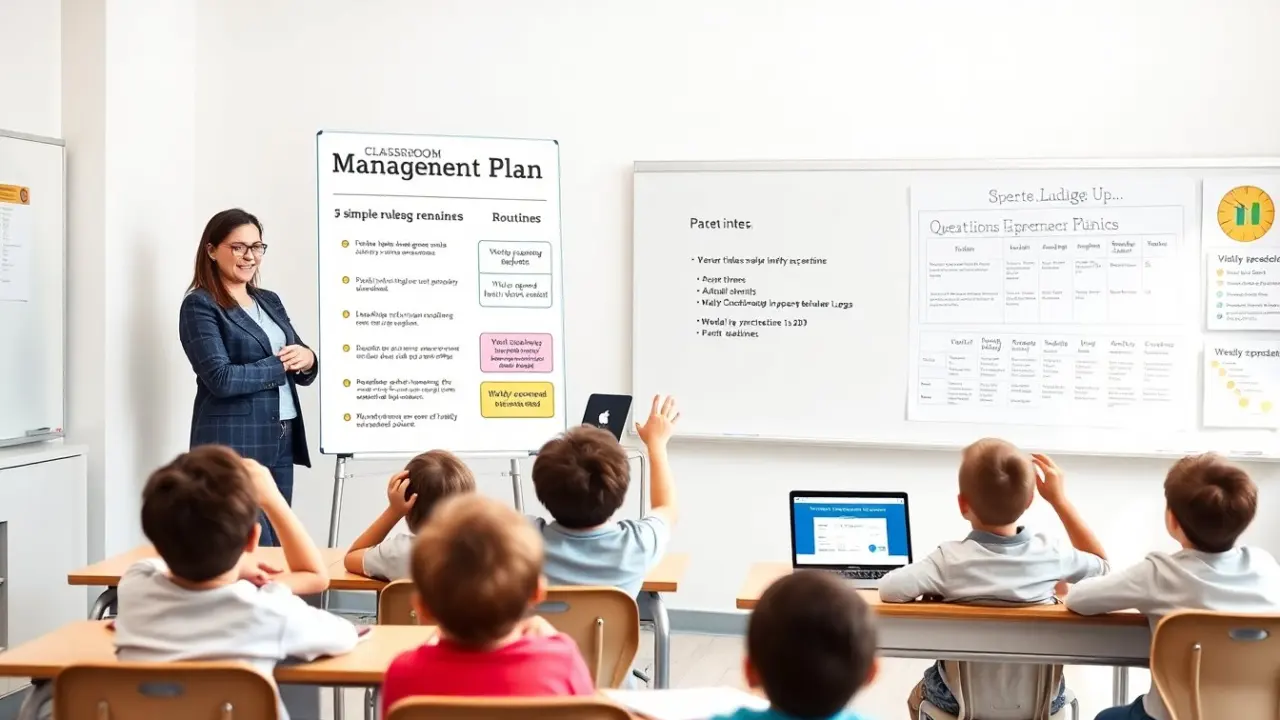
Teachers state three to five simple rules and teach them on day one. They model expected behaviors and practice routines with students until the actions become automatic. Staff use short scripts to teach transitions, lining up, and asking for help. They show, coach, and reinforce. The teacher gives specific praise for correct actions and links praise to the rule. The plan includes short practice sessions and quick reteach moments after breaks. Visual reminders and short anchor charts keep rules visible.
Practical steps for rollout include a multi-day teaching cycle: explicitly introduce a rule, model the behavior, have students practice, and provide immediate feedback. Use role play and guided rehearsal for common problem moments (e.g., working in groups, partner talk). Reinforcement should include low-effort, high-frequency acknowledgments—verbal praise, recognition tokens, or quick check-ins—that encourage repetition of desired behaviors.
When reteaching is needed, keep it brief and focused: two-minute mini-lessons that revisit one routine or one expected behavior. For students who need more support, add visual prompts, individualized practice, or a brief pre-cue from the teacher before transitions. Consistency of language and consequence is crucial: a single set of scripts and steps reduces confusion and maintains fairness across students and adults.
Designing The Physical And Instructional Environment For Behavioral Success
The classroom management plan aligns space and instruction to reduce friction. Teachers arrange seating to support supervision and clear movement paths. They place high-use materials within easy reach to cut transition time. Instruction follows a consistent flow with clear entry and exit routines. The teacher embeds brief active breaks and checks for understanding to keep students engaged. Visual timers and a clear daily agenda help students predict the session. Simple furniture choices and low-clutter surfaces lower off-task behavior and make the plan easier to use.
Consider small environmental edits that yield outsized benefits: orient the teacher’s desk for visibility rather than as a barrier, create clearly labeled zones for independent work and collaboration, and maintain a single landing area for materials that students must return to before leaving. Lighting, noise level, and the location of visual supports also affect behavior—keep critical prompts at eye level and minimize competing displays near work areas.
Instructionally, build routines into lesson design: plan transitions with a purpose (e.g., a two-step signal and a one-minute clean-up), use consistent signals for attention, and include quick formative checks so students stay cognitively engaged. When the physical setup and instructional flow are intentionally coordinated, the classroom naturally supports the behavioral expectations outlined in the classroom management plan.
Implementing, Communicating, And Monitoring Your Plan
Staff introduce the classroom management plan in a dedicated session with families and learners. They explain rules, routines, and rewards and show examples. The teacher shares the plan in writing and posts key steps in the room. Staff collect behavior data each day and review it weekly to spot patterns. They set measurable goals, like reduced disruptions per week, and track progress. Coaching cycles help teachers refine delivery. The plan includes a schedule for periodic review and updates based on data.
Effective communication extends beyond an initial meeting. Share a concise version of the plan with families at the start of the year and provide brief updates after major changes. Use a consistent format for student-facing lessons, family handouts, and staff checklists so everyone can reference the same expectations. When sharing data or concerns with families, focus on observable behaviors and collaborative steps for support rather than labels.
Monitoring should be practical and ongoing: use quick daily or weekly logs, brief teacher reflection prompts, and short team debriefs to identify patterns. Establishing measurable indicators (for example, frequency of out-of-seat incidents during math or average number of redirections per transition) lets teams set small, attainable targets and evaluate the effect of adjustments. Finally, schedule regular review meetings—monthly for the classroom team and quarterly with school leaders—to ensure fidelity, discuss exceptions, and update the plan to reflect what is working for students and teachers.