Goal setting vision board helps people clarify goals and focus effort. The board shows priorities and motivates action. It uses images, words, and dates to make goals concrete. The reader will learn a step-by-step method. The reader will learn prompts, layouts, and daily routines. The reader will learn how to review progress and avoid common errors.
Key Takeaways
- A goal setting vision board clarifies priorities and motivates action by combining images, words, and deadlines to make goals concrete and actionable.
- Using specific targets and measurable metrics on the vision board helps plan daily steps and track progress effectively.
- Daily routines involving reviewing the vision board, visualizing next steps, and naming daily actions foster consistent progress toward goals.
- Updating the vision board regularly by replacing images and adjusting deadlines reinforces commitment and celebrates small wins.
- Avoid overloading the board or using vague goals; focus on clear, measurable objectives and avoid comparing your progress to others for sustained motivation.
- Sharing the vision board progress with a trusted peer increases accountability and follow-through, turning the board into a dynamic, living plan.
Why Vision Boards Work: The Psychology Behind Goals, Clarity, And Motivation
A goal setting vision board gives people a single visual reference. The brain stores images and words together. Images trigger emotions. Emotions drive choices and action. The board creates clarity. Clarity reduces doubt and speeds decisions. People who use visual cues report higher focus and persistence. A person sees a goal and recalls steps more quickly. The board makes success feel real. When a person feels progress, reward circuits activate. That reward increases effort and habit formation. A person sets specific targets on the board. Specific targets help plan daily steps. A person updates the board to reflect wins. Updates reinforce identity and commitment. The board also limits distraction. When a person reviews the board daily, they reject tasks that do not match goals. Social research shows that visible goals increase accountability. A person who shares the board with a friend gains support. A person who reviews the board alone gains private focus. The board works for short-term aims and long-term aims. It works for work targets, health targets, learning targets, and money targets. A person can use the board to structure timelines and milestones. The goal setting vision board compresses intention into a clear signal the mind follows.
How To Build An Effective Vision Board (Materials, Layouts, And Prompts)
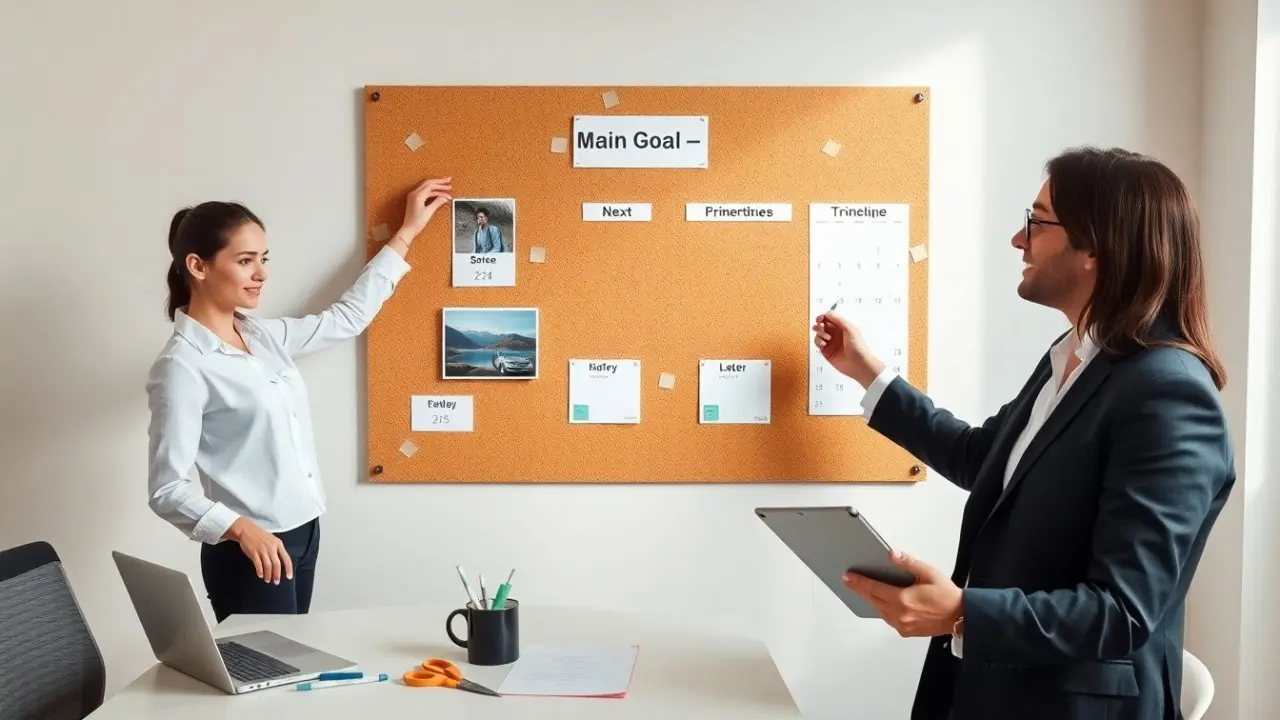
Gather simple supplies before starting. Use a poster board, cork board, or digital canvas. Use scissors, glue, markers, and tape. Use printed images, magazine cutouts, and personal photos. Use short phrases and clear dates. Arrange the board on a wall the person sees daily. Start with a single focus. The person writes one main goal in the center. The person adds three supporting goals around it. The person adds images that show the outcome. The person writes one measurable metric under each image. The person adds a deadline that matches the metric. Try two common layouts. The timeline layout places steps left to right. The theme layout groups items by life area. The person chooses the layout that fits the goal. Use simple prompts to pick items. Ask: What will I see when I reach this goal? Ask: What three actions will prove progress? Ask: What date will I call this goal complete? Ask: Who will support me on this goal? Answer the prompts and add answers to the board. Keep language short. Use verbs to show action. Use numbers to show urgency. Use color to highlight priority areas. Label the highest priority item as “now.” Label supporting items as “next” and “later.” For a digital board, create folders for images and set the wallpaper to the main image. For a physical board, place the board beside a mirror or above a desk. The person stands in front of the board and reads one line aloud each morning. The board then moves from plan into habit.
Using Your Vision Board To Turn Dreams Into Action: Daily Routines, Review Practices, And Common Pitfalls
Create a short daily routine around the goal setting vision board. The person spends two to five minutes each morning with the board. The person reads goals, visualizes a next step, and names one action for the day. The person writes that action on a simple to-do list. The person completes the action before mid-day. The person records one quick result at night. Use weekly reviews to track metrics. The person asks: Did I hit my metric this week? The person adjusts steps if progress stalls. Use monthly reviews to confirm deadlines and change images. The person replaces images that no longer inspire. The person celebrates small wins and marks them on the board. Avoid common pitfalls. A person should not overload the board with too many goals. Too many goals reduce focus and slow progress. A person should not use vague statements like “be happy” or “succeed.” Vague statements do not produce clear steps. A person should not ignore metrics. Metrics let the person measure action and change. A person should not expect overnight results. Small consistent actions produce steady change. A person should avoid comparison traps. Comparing the board to another person’s board harms focus. Instead, the person adapts practices that match their context. The person can add accountability to speed results. The person shares a weekly snapshot with one trusted peer. The peer asks about one metric. That check-in increases follow-through. The person also pairs the board with planning tools. A simple calendar and three daily tasks link the board to action. The goal setting vision board then becomes a living plan, not just a picture.