PBIS classroom management sets clear behavior supports for students. It gives teachers a simple framework for expectations and routines. It reduces disruptions and increases teaching time. The strategies below show how staff can set systems, teach behaviors, and use data to guide supports. The guidance is practical for any grade level, adaptable to different schedules, and designed so teachers and support staff can implement changes incrementally.
Key Takeaways
- PBIS classroom management effectively reduces disruptions by setting clear behavior expectations and routines for students.
- Teachers should define three to five simple, visible classroom expectations and explicitly teach routines through modeling and practice.
- Visual supports like posters and charts enhance students’ understanding and memory of expected behaviors.
- Consistent reinforcement and planned responses to common errors help maintain positive behavior daily.
- Using PBIS in classrooms increases teaching time and helps staff track behavior trends with simple data.
What PBIS Is And Why It Works In Classrooms
Positive Behavioral Interventions and Supports (PBIS) focuses on teaching expected behavior. PBIS classroom management uses prevention, teaching, and reinforcement. It sets schoolwide expectations and aligns classroom routines. It asks staff to define clear rules, teach those rules, and reward consistent practice.
At the classroom level, PBIS works because it replaces reactive management with proactive systems. When expectations are explicit and practiced, students know what success looks like and adults respond consistently. That predictable environment lowers escalation, creates more predictable transitions, and frees time for instruction. PBIS also emphasizes frequent, specific feedback so students receive information they can act on immediately.
Common classroom-level elements include: a short set of positively stated expectations; taught routines for common settings (arrival, transitions, group work); visual reminders; consistent reinforcement systems; and simple ways to collect behavior data for teams to review. These pieces can be introduced one at a time so implementation is manageable for teachers and support staff.
Set Up Clear, Simple Systems: Expectations, Routines, And Visual Supports
Define systems that students can follow every day. Keep systems brief and visible. The goal is one set of expectations across common classroom activities and a handful of clear routines that cover most of the school day.
Start by choosing three to five core expectations (for example: Be Respectful, Be Responsible, Be Safe). Write them in student-friendly language and display them at eye level. Link each expectation to concrete, observable examples for typical classroom contexts: lining up, group work, independent practice, restroom breaks, and technology use.
Develop routines around predictable moments that often cause disruption: entering the room, turning in work, asking for help, and transitioning between activities. For each routine create a short list of steps (2–6) and teach those steps explicitly through modeling, guided practice, and corrective feedback. Use the same language adults in the room will use when prompting students so cues are consistent.
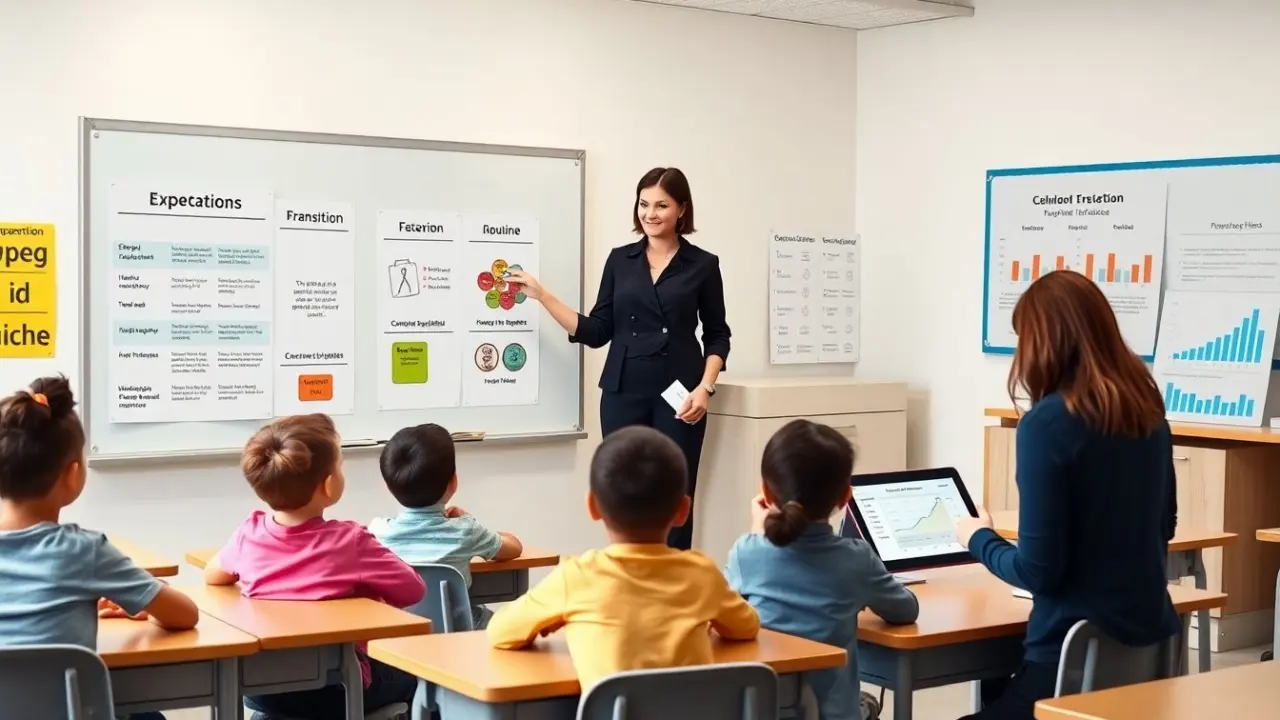
Visual supports increase clarity and independence. Effective visuals are simple, durable, and placed where they matter: pocket charts for group roles, step-by-step posters for transitions, labeled bins for materials, and quick-reference cue cards for students who need additional prompts. Visuals can be differentiated for younger students or those who need simpler language and images.
Define Classroom Expectations And Teach Routines Explicitly
Teachers should state three to five expectations in plain language. They should post the expectations where students can see them. Staff should teach routines for transitions, independent work, and group tasks. Teachers should model each routine with students. They should practice routines with role play and guided rehearsal. They should give immediate feedback during practice. Visual supports help memory. Teachers can use posters, quick charts, and labeled areas. Visuals should show steps in order. Students should review expectations each morning or after breaks. Regular review keeps behavior consistent. This approach makes PBIS classroom management easier to carry out.
Practical steps to implement this section:
- Model routines live: run the routine while students observe, then invite students to try it while you prompt.
- Use rehearsal cycles: teach, practice, reteach; provide corrective feedback that specifies what to do differently next time.
- Create a short lesson plan (5–10 minutes) for each routine and schedule those lessons into weekly plans until routines are fluent.
- Provide opportunities for students to self-monitor using a checklist or quick rubric tied to the posted expectations.
Teach, Reinforce, And Respond: Daily Practices For Positive Behavior
Staff should use brief lessons to teach expectations each week. They should reinforce expected behavior during instruction. They should plan responses for common errors. Daily practice keeps expectations active and clear.
Reinforcement should be frequent, specific, and aligned to expectations. Practical reinforcement strategies include: specific verbal praise (“I like how Maya raised her hand and waited”), behavior-specific tokens or points tied to classroom privileges, and group contingencies when appropriate. The emphasis is on catching students doing the right thing often enough that new habits form.
Planned responses reduce guesswork when errors occur. Identify common errors (e.g., off-task talking, leaving work incomplete, not following transition steps) and script short corrective responses that restore learning without long interruptions. Use a hierarchy: quick nonverbal prompts first, brief reteaching or rehearsal for repeated errors, and targeted supports (small-group reteaching, parent contact, or referral for additional assessment) when patterns persist.
Use simple data collection so teams can monitor whether classroom systems are working. Examples of classroom-level data include tallies of praise-to-correction ratios, daily logs of common errors, and brief notes on students who need additional support. Review these data with grade-level teams or leadership during regular check-ins to decide whether to adjust routines, increase reinforcement, or add targeted interventions.
Roles and collaboration matter. Teachers, paraprofessionals, and administrators should agree on language and expectations so students receive consistent messages. When a student needs more support, use a problem-solving approach: define the behavior, describe when it happens, try a focused, time-limited strategy, and monitor outcomes. Small, data-informed adjustments often prevent the need for more intensive interventions.
Finally, maintain fidelity by starting small, coaching in the classroom, and celebrating progress. PBIS classroom management is most effective when practices are routine, measurable, and supported by the whole school community.