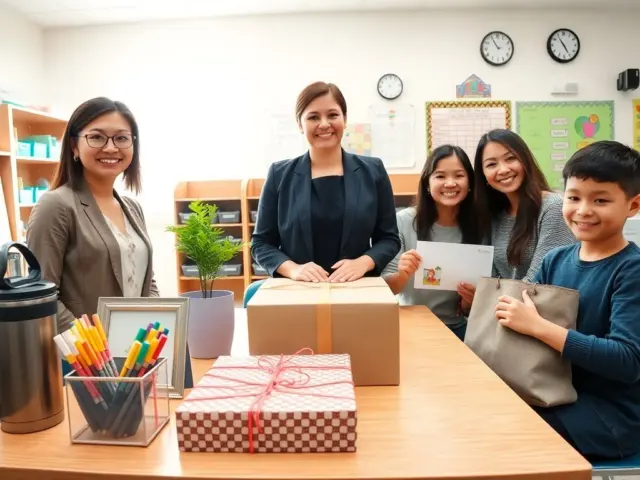
A teacher appreciation message tells a teacher that someone noticed effort, care, and results. The message shows respect for time, patience, and skill. It helps build trust between student and teacher. It improves morale and can change a teacher’s day. This guide explains why a teacher appreciation message matters and gives clear templates, tone tips, timing ideas, and ready-to-use lines.
Key Takeaways
- A teacher appreciation message boosts morale and strengthens teacher-student relationships by recognizing effort and care.
- Use a simple 5-step template focusing on specific actions and their positive impact to write sincere and clear messages.
- Keep the tone respectful and warm, personalize with memorable details, and avoid vague or exaggerated praise.
- Short messages suit cards or notes, while longer messages fit emails or year-end tributes featuring named actions and gratitude.
- Send appreciation messages at milestones like the end of a unit or Teacher Appreciation Week, and present them thoughtfully to increase sincerity.
- Close messages with warm, clear sign-offs that restate gratitude and help teachers remember the sender.
Why A Teacher Appreciation Message Makes A Difference
Teachers work long hours and handle many tasks. A teacher appreciation message gives a clear signal that work matters. It boosts morale and reduces burnout. It improves teacher-student relationships. It encourages better classroom culture and more patient instruction. School leaders and families can use a teacher appreciation message to shape school climate. The message also creates repeat positive behavior: teachers repeat what they see rewarded. Small notes and messages add up over a school year.
Beyond immediate morale, appreciation messages contribute to longer-term effects: they validate strategies that helped students succeed, encourage reflection on effective practices, and can prompt teachers to maintain or amplify supportive behaviors. For newer teachers, a single sincere note can reinforce confidence; for experienced teachers, it can be a timely reminder that their work is seen and valued.
Even brief acknowledgments influence interpersonal dynamics. A well-timed, specific teacher appreciation message strengthens trust, increases openness during parent-teacher partnerships, and models gratitude for classmates. It is an easy, low-cost action with outsized social and emotional benefits for school communities.
A Simple 5-Step Template To Write A Heartfelt Message
Step 1: Start with the role and relationship. Name the teacher and state the class or term. Step 2: State one specific action the teacher took. Use a single clear example. Step 3: Explain the effect of that action on the student or class. Step 4: Offer a brief thanks. Use a direct phrase such as “Thank you for…” Step 5: Close with a short wish or sign-off. The template keeps the message focused and sincere. Example: “Ms. Lee, as my science teacher this year, you explained experiments clearly. My confidence in lab work grew. Thank you for your patience. Best, Jordan.”
Tips for using the template effectively:
- Be specific: replace general phrases like “You’re great” with concrete actions: “You stayed after class to help me understand fractions.”
- Be concise: one to three sentences often work best for cards or quick notes.
- Be honest: avoid embellishing; sincerity reads clearly.
- Adapt formality to context: a kindergarten parent note will sound different than a college student email.
Variations to fit different senders:
- From a parent: identify your child and mention observable changes (e.g., “My daughter now enjoys reading because of your book choices”).
- From a class or group: lead with who is sending the note and include short, curated student entries.
- From a colleague or administrator: emphasize professional contributions and classroom impact.
Tone, Length, And Personalization: What To Include (And Avoid)
Tone should stay respectful and warm. The writer should use concrete words and short sentences. Length should match context: one line for a card, a short paragraph for email. Personalization should include one detail the teacher will remember. Avoid vague praise and long lists of adjectives. Avoid clichés and empty statements. Do not exaggerate or invent facts. Keep language direct. A good teacher appreciation message shows a single truth clearly and keeps the emotional note genuine.
What to include:
- A specific example that shows how the teacher helped (a lesson, a conversation, or a class activity).
- A clear statement of the impact (improved understanding, greater confidence, enjoyment of a subject).
- A short closing that identifies the sender so the teacher can connect the praise to a face or name.
What to avoid:
- One-word praise without context (“Amazing!” with no example).
- Overly dramatic or hyperbolic language that may feel insincere.
- Private or sensitive details that shouldn’t be shared publicly.
Matching length to medium: a sticky-note thanks should be one sentence; a card can hold two to three sentences; an email or letter can expand to include examples, reflections, and future hopes. Personalization can be as small as a detail about a shared moment—teachers notice when readers remember the specifics.
Examples: Short Messages For Cards And Notes
“Mr. Chen, your reading tips made me a better reader. Thank you.”
“Thank you, Ms. Ortiz. Your feedback helped my math grade.”
“Mrs. Rivera, you made science class fun. I appreciate your energy.”
“Thank you for always checking in. You made school feel safe.”
“Your patience helped me try harder. Thank you, Coach.”
Each short teacher appreciation message uses one specific detail and a clear thanks. These lines fit cards, sticky notes, and lunchbox notes. To personalize further, add one tiny detail: a date, a project, or the sender’s class (for example, “Thank you — 5A, Sam”).
Examples: Longer Messages For Emails, Gifts, Or End‑Of‑Year Tributes
“Dear Ms. Park, in tenth-grade biology you spent extra time explaining cellular models. That time helped me pass my lab practical and choose biology as a major. Your clarity and encouragement made a real difference. Thank you for investing in my learning. Sincerely, Alex.”
“Mr. Daniels, you met with our class after school to review essays. His comments lifted writing skills across the group. The team grew more confident in peer review. We wanted to say thank you for guiding us with respect., Student Council”
Longer messages allow room to reflect on growth, describe a turning point, or note how lessons carried beyond the classroom. When writing a longer teacher appreciation message, organize it: open with the relationship, tell a brief example, describe the result, express thanks, and close with a clear sign-off. Edit for clarity and brevity—longer does not mean rambling.
When To Send, Presentation Ideas, And Group Messages
Send a teacher appreciation message after a clear milestone: the end of a unit, after parent-teacher conferences, or during teacher appreciation week. Present messages in small, thoughtful ways. Place a note on the desk, include a message in a gift, or add lines to a class card. For group messages, collect short sentences from many students and compile them into one letter. The organizer should edit for clarity and keep each student line intact. Group messages show shared impact and feel communal. Simple presentation increases sincerity.
Presentation ideas that increase meaning:
- Attach a short teacher appreciation message to a small, useful item (a pen, sticky notes, or a bookmark) so the note is seen often.
- Create a display board in the staff room with student messages so teachers can read them during breaks.
- For remote learning contexts, compile messages into a single PDF or slide the teacher can save and reread.
Guidance for group messages:
- Set a clear deadline and format (one sentence per student) to keep the final letter coherent.
- Edit gently for grammar and length but preserve each student’s voice and wording.
- Consider anonymizing sensitive comments and ensuring all messages are appropriate and respectful.
Closing Lines And Sign-Offs That Leave A Lasting Impression
Choose a closing line that restates gratitude and wishes well. Use short options like “With thanks,” “Grateful for you,” or “Thank you for everything.” Pair the closing with a clear sign-off: the student’s name, class, or year. For a group note, include the class name and grade. Avoid generic endings that sound formal and distant. A strong teacher appreciation message ends with warmth and clear identity. That ending helps the teacher recall the sender when they read the note later.
Examples of effective sign-offs:
- First name and class: “Sincerely, Maya — 6B”
- Family perspective: “With appreciation, The Martinez Family”
- Group sign-off: “Thank you from Class 8A”
Final checklist before sending a teacher appreciation message: read it aloud to check tone, confirm the teacher’s preferred name or title, remove any unintended criticism, and add the sender’s identifying detail. Small care at the end makes the message feel complete and memorable.