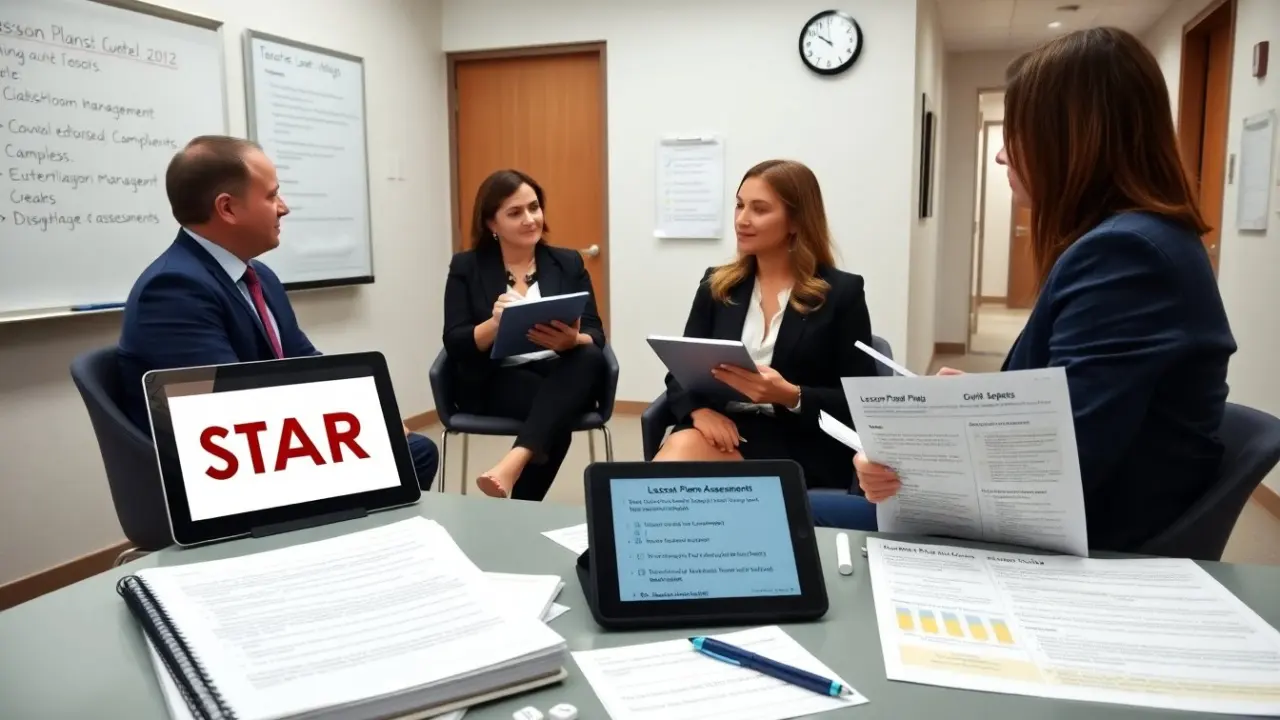
Teacher interview questions appear in the first minutes of hiring meetings. This guide lists common teacher interview questions and shows clear ways to answer them. It helps candidates build concise, evidence-based responses. The reader will learn how to structure answers, handle behavior scenarios, discuss assessment strategies, address subject-specific needs, and close interviews with strong questions. Use this guide to prepare a range of concrete examples that demonstrate impact, show reflective practice, and align your responses with the school’s stated priorities.
Key Takeaways
- Teacher interview questions often focus on classroom experience, teaching philosophy, and teamwork, so prepare concise, evidence-based answers using a clear structure.
- Use the STAR framework (Situation, Task, Action, Result) to respond effectively to behavioral and classroom management scenarios.
- Demonstrate knowledge of instructional design and assessment by discussing specific learning objectives, assessment tools, and how data informs reteaching.
- Address subject-specific and differentiation strategies with concrete examples tailored to grade level and mention accommodations for diverse learners.
- Prepare thoughtful questions for interviewers to show interest, and close by reinforcing a key strength and following up professionally after the interview.
Common Interview Questions And How To Structure Your Answers
Hiring panels often repeat core teacher interview questions. Panels ask about classroom experience, teaching philosophy, lesson planning, and teamwork. Candidates should use a clear formula: state the main point, give one concrete example, and summarize the outcome. Teachers should name the skill, describe the action, and report the result. Keep answers brief and specific. For example, when asked “Why do you teach?” the candidate states motivation, cites a classroom example, and notes student growth. This approach keeps teacher interview questions focused and memorable.
To expand answers without rambling, plan two succinct examples tied to different competencies (instruction, management, family communication). Begin with a one-sentence thesis that directly answers the question, then move to the most relevant example using measurable or observable outcomes where possible (student work, behavior shifts, improved participation). Close by connecting the example to your ongoing practice: what you learned and what you would do next. This pattern signals reflection, growth, and readiness to apply skills to the new role.
Classroom Management And Behavioral Scenario Questions
Interviewers test classroom management with behavior-based teacher interview questions. They describe a problem and ask how the candidate responds. The candidate should identify the behavior, state the immediate action, and note the follow-up strategy. Answers should show consistency, clear rules, and positive reinforcement. The candidate should mention data or observation when possible. For instance, they can describe a seating change, a rubric for conduct, and a parent conference that improved attendance and participation.
When preparing responses, include tiered strategies: universal classroom routines, targeted interventions for students showing repeated problems, and school-level referrals when necessary. Describe how you set expectations the first week, reinforce them with routines and visual cues, and track incidents so patterns inform proactive adjustments. If asked about a specific incident, emphasize de-escalation techniques, restorative language, and plans for monitoring progress. This demonstrates both immediate classroom control and a system for long-term behavior change.
Sample Scenario Prompts And Response Framework (STAR)
Sample Scenario Prompts And Response Framework (STAR)
Panels use scenarios like: “A student disrupts class repeatedly.” “A parent disputes a grade.” “Two students fight.” The candidate should use the STAR framework. State the Situation, list the Task, describe the Action, and report the Result. Use simple sentences. For example: Situation: a student interrupted lessons daily. Task: reduce disruptions to protect learning. Action: the teacher met the student, set clear expectations, and offered targeted support. Result: the student’s disruptions fell and test scores rose. This structure fits most teacher interview questions and keeps answers measurable.
To practice, write three STAR responses ahead of time that cover different domains: academics (boosting a struggling reader), behavior (reducing disruptions), and family engagement (resolving a grading concern). Keep each response to 3–5 sentences and include at least one concrete metric or observable change (attendance, assessment performance, or a completed communication log). During the interview, adapt your prepared STARs to match the specific prompt and avoid sounding rehearsed by varying details and language.
Instructional, Assessment, And Curriculum Questions
Interviewers ask instructional teacher interview questions about lesson design and assessment. The candidate should name learning objectives, identify formative checks, and show how they adjust instruction. When asked about assessments, the teacher should list specific tools: quizzes, exit tickets, observations, and projects. The candidate should explain how assessment data drives reteaching. For curriculum questions, the teacher should state alignment with standards, give an example lesson, and show student outcomes. Concrete evidence matters more than vague claims.
Go deeper by describing the cycle of planning: identify standards and learning targets, design tasks that elicit evidence of mastery, use formative checks to guide instruction, and plan reteach or extension based on analysis. When possible, reference specific types of formative assessment you use for different age groups (quick checks, think-pair-share, running records) and how you analyze results to create small-group plans. Mention collaborative practices, such as aligning assessments with colleagues and using common rubrics, to show you can work within a departmental or school-wide system.
Subject-Specific And Differentiation Questions (Elementary To Secondary)
Panels pose subject-specific teacher interview questions to test content knowledge and differentiation. The candidate should state grade-level goals, provide an example lesson, and show one differentiation strategy. For elementary candidates, name strategies for phonics, math fact fluency, or reading groups. For secondary candidates, cite scaffolded tasks, lab design, or text complexity adjustments. The candidate should mention at least one accommodation for diverse learners, such as modified tasks, visual supports, or tiered assignments. Short, concrete examples answer these teacher interview questions best.
Provide sample mini-lessons you could teach on the spot and explain how you would adapt them: show a quick opener, a guided practice with checks for understanding, and independent application with scaffolded supports. For differentiation, describe three levels of task complexity, choices in product or process, and how you monitor each group’s progress. Include examples of supports for English learners, students with IEPs, and advanced learners so interviewers can picture your inclusive classroom practice.
Questions To Ask Interviewers And Final Tips For Strong Closings
Candidates should prepare questions to ask interviewers at the end. Good questions include: “What are your priority goals for this role?” “How does the school support professional growth?” and “What are typical class sizes?” These questions show interest and fit. For closing, the candidate should restate one strength, reference a specific school need, and thank the panel. They should follow up with a brief email that mentions a point from the interview and offers any requested documents. These steps make teacher interview questions turn into job offers.
Other effective closing tactics: tie a final example directly to a school need mentioned during the interview, express enthusiasm for contributing to the school’s culture, and ask about next steps and timeline. Prepare a 15–30 second closing script that highlights one measurable success and a plan for immediate impact in the new role. After the interview, send a concise thank-you note that restates your fit, answers any outstanding questions, and attaches requested artifacts (unit plan, sample assessments) if applicable. These actions help cement a positive impression and keep the focus on your ability to deliver results.