Teaching reading comprehension strategies helps teachers raise student understanding quickly and sustainably. The article gives clear methods, short routines, and assessment tips that fit into regular classroom time. It highlights which strategies produce the biggest instructional gains, provides step‑by‑step lesson routines, and explains how teachers can check progress and adjust instruction. Readers will find classroom‑ready moves, examples, and practical adaptations for diverse and multilingual classrooms they can try tomorrow without extensive preparation.
Key Takeaways
- Teaching reading comprehension strategies significantly boosts student understanding and achievement across subjects.
- Teachers should focus on five core strategies: summarizing, predicting, questioning, visualizing, and monitoring comprehension.
- Effective lessons include clear objectives, modeling, guided practice, and formative assessments to track student progress.
- Progress monitoring with brief measures and rubrics enables timely instructional adjustments and targeted reteaching.
- Adapting strategies with simplified language, visuals, and peer support is essential for diverse and multilingual learners.
- Engaging families with simple home activities and culturally relevant texts strengthens comprehension development.
Why Teaching Reading Comprehension Matters — Cognitive, Academic, and Lifelong Benefits
Teaching reading comprehension strategies improves cognitive processing and academic outcomes by making thinking visible and repeatable. When teachers explicitly teach how to infer, summarize, and question text, students build mental routines that help them connect ideas, draw conclusions, and retain information. These mental routines reduce the working‑memory load students face when decoding and trying to understand complex sentences or unfamiliar concepts.
Academically, students who routinely practice comprehension strategies transfer those skills to writing, science, social studies, and math word problems because they can identify key ideas and organize information. Comprehension instruction also fosters metacognition: students learn to recognize when they do and do not understand, which leads to better study habits and more effective use of classroom time. Over the long term, stronger comprehension supports greater reading for pleasure, expanding vocabulary and background knowledge—two mutually reinforcing drivers of improved comprehension.
Beyond school, comprehension strategies underpin lifelong learning. Adults who learned these strategies continue to use them when evaluating news, following instructions, or learning on the job. For classrooms, the implication is clear: investing time in teaching reading comprehension strategies yields benefits across subjects and over students’ lifetimes, narrowing gaps and increasing equity when instruction is systematic and sustained.
Five High‑Impact Comprehension Strategies Every Teacher Should Teach
Teachers should teach five practical strategies that produce reliable gains across grade levels. Below are descriptions, short classroom routines, and simple examples for each strategy so teachers can implement them immediately.
1. Summarizing — Purpose: identify main ideas and essential details. Routine: model a one‑sentence summary aloud after reading a paragraph, then ask students to write or orally produce a one‑sentence summary with a partner. Example prompt: “One sentence that tells the main idea and one supporting detail.” Use prompts that scaffold for younger students (Who? What? Where?).
2. Predicting — Purpose: activate prior knowledge and set a reading purpose. Routine: before reading, ask students to make a prediction and give one reason tied to the title, headings, or images. After reading, students revisit and revise their prediction. Example: use a three‑column chart: Prediction / Evidence from text / Revised thinking.
3. Questioning — Purpose: deepen engagement and monitor comprehension. Routine: teach students to generate literal (what, when) and inferential (why, how) questions. Use a “Question Ladder” where early questions are surface level and higher rungs require inference or evaluation. Allocate time for students to ask, answer, and refine questions in small groups.
4. Visualizing — Purpose: create mental images to support meaning. Routine: after a short passage, provide a quick sketch prompt (draw the scene or process) and add labels for key elements. Pair students to explain their image using evidence from the text. Visualizing is especially powerful for science and nonfiction texts with processes or timelines.
5. Monitoring Comprehension — Purpose: foster metacognition and repair strategies. Routine: teach simple self‑check signals (e.g., thumbs up/side/down or the traffic light) and explicit repair moves (reread, read ahead, ask a question, look at visuals). Practice these signals during read‑alouds so students internalize when and how to use them.
Teaching these strategies in short, focused lessons (10–20 minutes) with frequent practice helps students build automaticity. A recommended lesson flow: objective and connection (1–2 minutes), teacher model (3–5 minutes), guided practice in pairs or small groups (5–8 minutes), and a brief independent or exit task that shows strategy use (2–5 minutes). To maximize transfer, use a range of texts and explicitly prompt students to apply strategies across genres.
Lesson Planning, Formative Assessment, And Progress Monitoring For Comprehension
Effective lesson planning for teaching reading comprehension strategies begins with a clear learning target and a planned model of the strategy in action. A concise lesson plan template includes: learning objective (student‑friendly), connection to prior learning, explicit modeling, guided practice with feedback, independent application, and a brief formative check. Keep each lesson focused on a single strategy or a strategic combination to avoid cognitive overload.
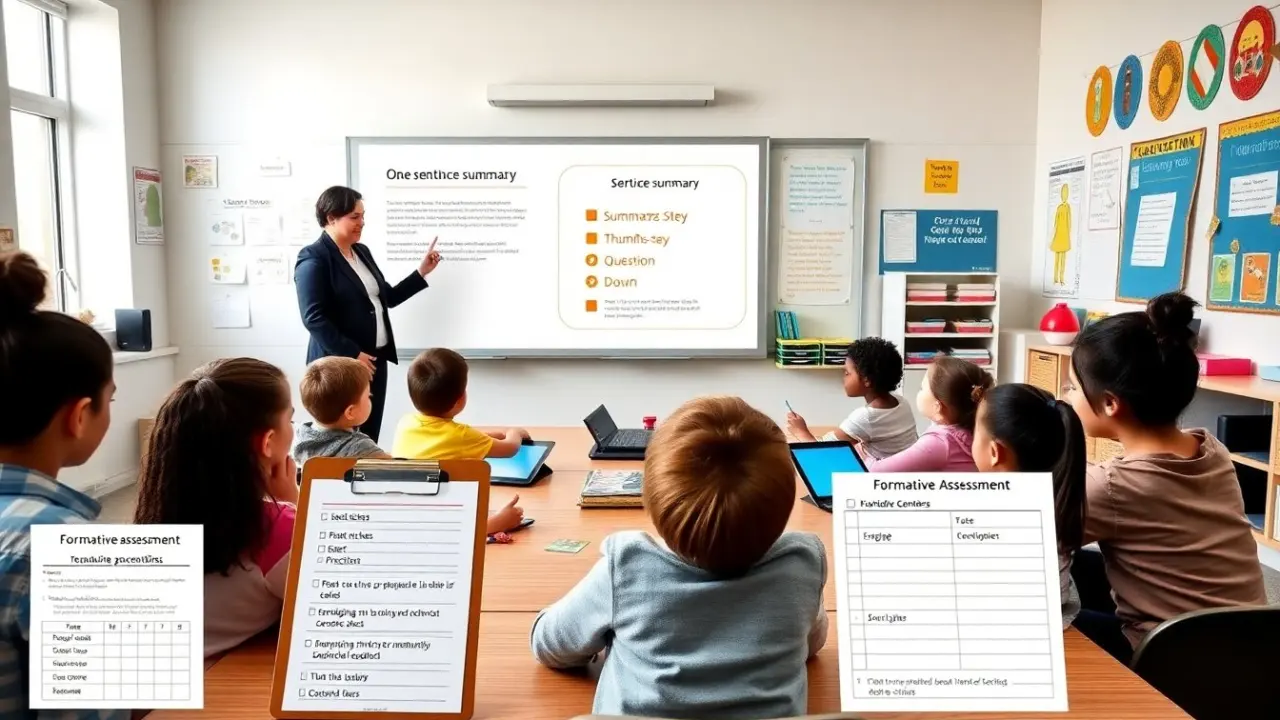
For formative assessment, use quick, low‑stakes checks that reveal whether students are using the target strategy. Examples include one‑minute written summaries, exit tickets that require a specific strategy move (e.g., list two inferential questions), annotated passages with teacher checks for targeted marks (main idea, confusing vocabulary), and short oral retells. Rotate types of checks so you capture written and oral competence. Collecting two quick samples per week per student is a reasonable target for ongoing formative information without overburdening grading.
Progress monitoring should be systematic and visual. Use brief curriculum‑based measures that combine fluency and comprehension—such as short passage probes followed by three comprehension questions or a one‑minute retell scored for main idea and details. Graph individual student performance weekly or biweekly to spot trends. When progress stalls, use the data to select a reteach focus (for example, reinforcing monitoring strategies or providing additional scaffolded practice with summarizing).
Rubrics and criteria clarify expectations. A simple three‑level rubric (emerging, developing, secure) for each strategy is effective: list observable behaviors for each level (e.g., for summarizing: emerging—identifies an irrelevant detail; developing—identifies main idea but misses detail; secure—states main idea and two supporting details). Use rubrics for student self‑assessment and peer feedback to promote ownership of strategy use. Finally, integrate brief collaborative routines—think‑pair‑share, reciprocal teaching roles (summarizer, questioner, clarifier, predictor)—to increase practice opportunities and feedback frequency.
Adapting Comprehension Instruction For Diverse Learners And Multilingual Classrooms
Adapting teaching reading comprehension strategies for diverse classrooms requires planning for language, background knowledge, and processing differences. Keep strategy steps short and explicit, use visual supports, and provide multiple ways for students to demonstrate comprehension (oral, visual, written). Sentence frames and stem banks (e.g., “I think the main idea is…” or “I predict that because…”) reduce linguistic load and support participation for multilingual learners.
For multilingual students, preteach essential vocabulary and concepts with images or gestures and allow use of students’ home languages when beneficial (brief bilingual discussions, translation checks). Pairing stronger readers with multilingual peers during guided practice promotes language modeling and collaborative meaning making. When bilingual texts are available, use them selectively to compare structure and vocabulary.
For students with learning differences, break tasks into smaller steps, increase repetition, and incorporate multisensory supports (audio recordings, graphic organizers, manipulatives). Use consistent routines and provide extra processing time. Allow alternative response formats: a diagram instead of prose for students who struggle with writing, or an oral retell instead of a written summary. Monitor progress more frequently for students receiving intensive support and document which scaffolded moves produce improvement so you can fade supports purposefully.
Family and community engagement strengthens comprehension development. Send brief home activities that reinforce one strategy per week using short, familiar texts (a recipe, a news blurb, a picture book) and clear instructions in the family’s preferred language when possible. Suggest simple prompts families can use: ask a child to summarize in one sentence, make a prediction from a picture, or draw what they imagine. Finally, select culturally relevant texts that reflect students’ lives and experiences—this increases motivation and provides stronger footholds for connecting new information to background knowledge, a critical driver of comprehension.