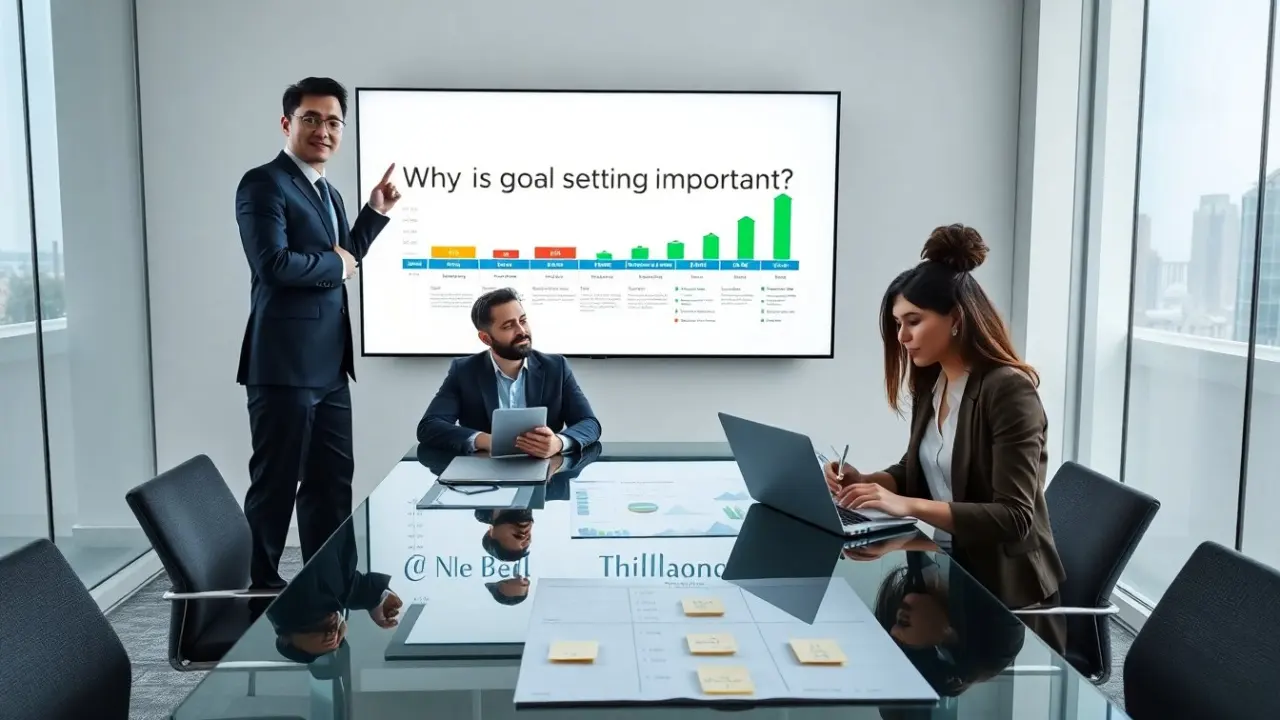
Why is goal setting important is a question many people ask when they plan their work or life. The phrase why is goal setting important guides this article. It shows how goals change thought into action, help people choose tasks, and improve results. The reader will see clear reasons and simple steps. The tone stays direct and helpful. The article uses plain language and short sentences. Below are practical explanations and examples that show how goal setting works in everyday life, at work, and in teams so readers can apply the ideas immediately.
Key Takeaways
- Goal setting is important because it turns ideas into clear, actionable tasks with deadlines and measurable outcomes.
- Setting goals improves motivation and performance by providing visible progress and accountability for consistent work.
- Both short-term milestones and long-term vision are essential to maintain momentum and ensure steady, purposeful progress.
- Clear goals enhance focus, decision-making, and time management by prioritizing tasks that directly contribute to desired outcomes.
- Goals help avoid distraction by establishing priorities and deadlines, enabling better focus and reducing multitasking.
- Measuring progress through goal setting builds confidence and encourages tackling larger challenges with sustained effort.
- Adjusting goals after setbacks is important to learn from experience, keep goals realistic, and continue forward progress effectively.
How Goals Turn Ideas Into Action
Why is goal setting important when someone has an idea? A goal gives that idea a target and a plan. Rather than leaving an idea vague, a goal forces you to define an outcome, a deadline, and the steps needed to reach it. For example, instead of “get healthier,” a goal could be “walk 30 minutes five times a week for three months.” That goal can be broken into daily and weekly tasks, scheduled on a calendar, and tracked. In teams, clear goals let leaders assign roles, sequence work, and identify dependencies so people move from discussion to coordinated action. The practical result is less wasted effort, faster progress, and clearer criteria for when a project is finished.
Goals Improve Motivation And Performance
Why is goal setting important for motivation? A well-defined goal makes progress visible, which motivates further effort. When you can see milestones being reached, your brain links effort with reward and sustains engagement. Clear goals also enable regular feedback: you can measure results, reflect, and adjust behavior. In workplaces, managers use goals to focus reviews and coaching; that feedback loop helps people refine skills and increase output. Over time, consistently setting and achieving goals trains people to set stronger targets and raise their performance ceiling. Accountability—whether to yourself, a manager, or a teammate—also encourages steady follow-through and reduces procrastination.
Short‑Term Milestones And Long‑Term Vision
Why is goal setting important for both short and long term plans? Long-term vision provides direction: it answers what you ultimately want to achieve and why it matters. Short-term milestones translate that vision into manageable steps. For example, a multi-year career goal can be divided into yearly skills to learn, quarterly projects to complete, and weekly habits that build competence. Milestones give frequent feedback and small wins that sustain motivation while the long-term vision keeps those wins aligned with a larger purpose. Regularly reviewing and adjusting milestones helps you respond to new information and keeps the plan realistic without losing sight of the bigger objective.
Goals Enhance Focus, Decision‑Making, And Time Management
Why is goal setting important for focus and decisions? Goals create a clear filter for choices: when you know the target, it is easier to say yes to work that advances it and no to tasks that don’t. Writing down goals makes trade-offs visible and simplifies prioritization. Practically, you can use goals to block calendar time for deep work, group similar tasks, and reduce context switching. Teams that align around shared goals spend less time in meetings that lack purpose and more time on high-impact work. Over weeks, this alignment improves time management because effort maps directly to outcomes instead of scattering across low-value activities.
Avoiding Distraction With Priorities And Deadlines
Why is goal setting important to avoid distraction? A goal acts as a built-in priority checklist: before starting a new task you can ask whether it moves the goal forward. Deadlines create urgency that limits drift and procrastination. Practical habits—such as maintaining a single prioritized task list, using time blocks tied to goals, and setting short deadlines for milestones—reduce multitasking and interruptions. Teams can use sprint goals or short review cycles to reject distractions and preserve focus. These practices make saying no easier and protect time for the most important work.
Goals Build Confidence Through Measurable Progress
Why is goal setting important to build confidence? Measurable goals produce evidence of progress: completed tasks, improved metrics, or new skills learned. That evidence reduces uncertainty and gives concrete reasons to trust your capabilities. Each small success reinforces effort and makes tackling a larger challenge less intimidating. Leaders can leverage measurable goals to recognize growth and support development, which further strengthens confidence. Tracking progress also helps identify patterns of improvement so you can replicate effective approaches and iterate on weaker ones.
Learning From Setbacks And Adjusting Goals
Why is goal setting important when setbacks happen? Goals provide a benchmark for honest review: by comparing actual results to expected outcomes you can diagnose what went wrong and isolate controllable factors. This turns failures into data rather than discouragement. Practical steps after a setback include listing hypotheses, testing one change at a time, and shortening the next milestone to regain momentum. Adjusting scope, timeline, or tactics keeps goals realistic and preserves learning. People and teams who treat goals as living tools—open to revision—tend to recover faster and improve their methods over time.